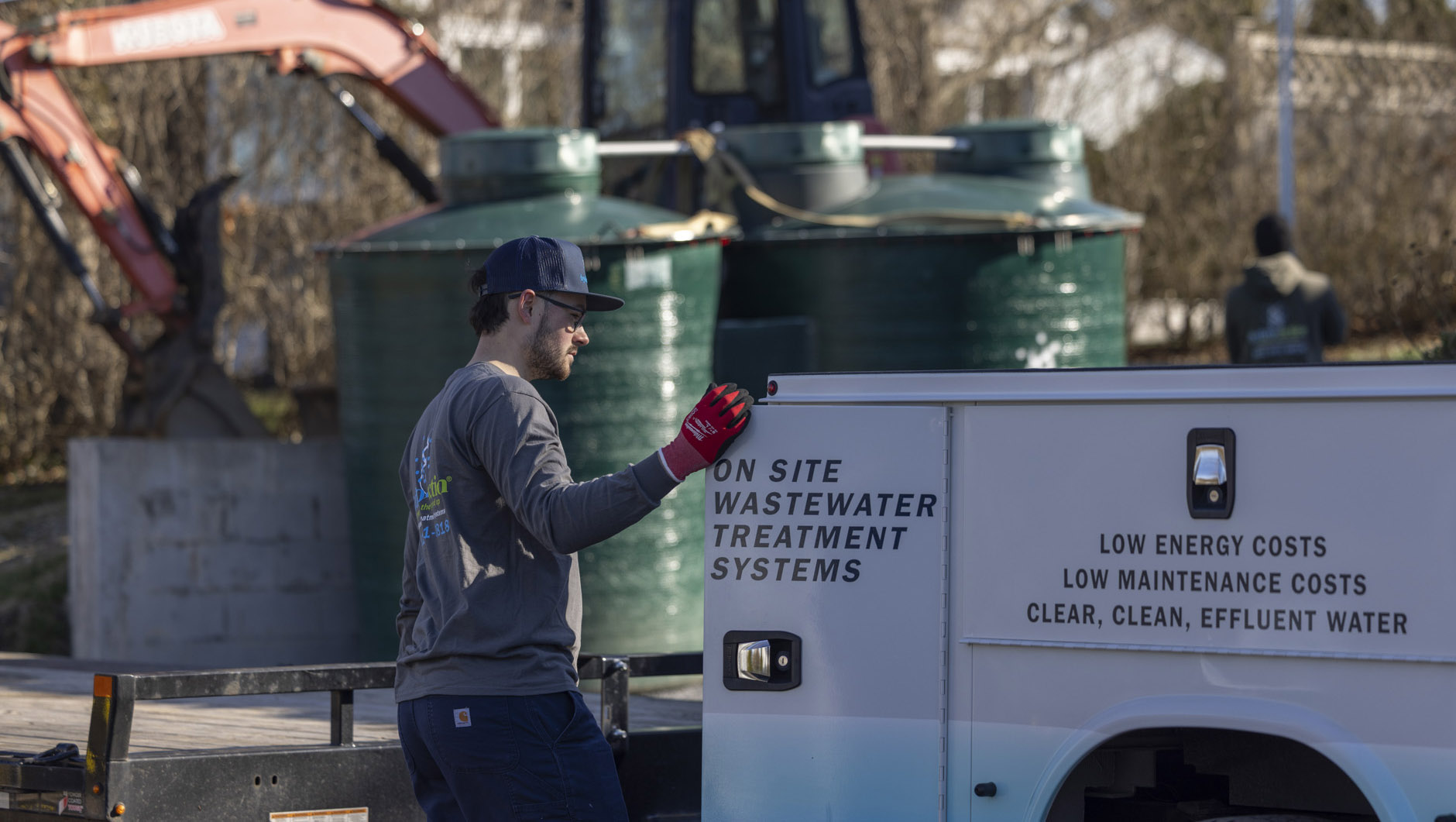

Installation
Installation of a Hydro-Action system is a coordinated, straightforward process that begins during the design phase. Architects and engineers collaborate with Wastewater Works, Inc. to select the appropriate system and integrate it into project plans using our engineer’s folder, ensuring it meets site conditions and county requirements. Early coordination helps streamline approvals and minimize revisions before construction begins.
Once approved, installation is carried out by trained and qualified liquid waste license holders. Wastewater Works, Inc. provides on-site installer training and technical support to ensure proper installation. Afterward, the system is commissioned and performance is verified, delivering reliable, long-term wastewater treatment that meets regulatory standards.
- Installed by Trained Professionals Systems are installed by qualified contractors who receive Hydro-Action-specific training and support.
- Straightforward Installation Installation follows a clear, proven process and integrates easily into new construction or system upgrades.
- Quality Maintenance Designed to reduce system failures, emergency pump-outs, and ongoing maintenance costs.
- System Monitoring Included Built-in controls alert users if service is needed, providing peace of mind.
- Local Support Available Wastewater Works, Inc. offers ongoing technical support before, during, and after installation.
Hydro-Action Installation Process
1. Tank Installation
- Install the tank and backfill up to the invert level.
- Verify that the tank is level.
- Ensure the outlet pipe is securely supported (e.g., with a brick) and that the area beneath is compacted to prevent future settling.
2. System Build-Out
- Install pumps and connect all piping as required.
- Set the control panel and run airline (at grade level). The silver vents must remain fully exposed.
- The installer must have a trench prepared before Wastewater Works arrives to set the panel.
- The control panel must be within 50 feet of the tank, visible, and not within 10 feet of propane tanks.
3. Startup Preparation
- Both sides of the tank must be filled with water up to the outlet pipe to complete the startup.
- An electrician is required to:
- Install conduits and wiring from the building to the control panel, and from the panel to the tank.
- Enter wiring from beneath the panel — side entry is not permitted.
- Equip each tank with a waterproof splice box and quick disconnect.
- Seal all unused or open ports on the control panel to prevent water intrusion.
4. Electrical Requirements
- Hydro-Action units require a dedicated 20-amp service.
- If a pump tank is used, a 30-amp service is required.
- If an alternate pump tank technology is used, a separate control panel must be provided for that system.
5. Startup Procedure
- Once electrical work is complete, contact Wastewater Works immediately to schedule a startup and clock programming.
- Do not operate the system before this step, pumps running on factory settings will burn out.
- The county inspection must be scheduled after the clock has been programmed to ensure the best chance of passing.
6. Maintenance Notice
- Any technician or company performing maintenance on a Hydro-Action tank must contact Wastewater Works when a maintenance contract is requested. This ensures that the system clock is properly programmed and functioning as intended.